The Sound of Beat: Guitars, Amplifiers and Drums
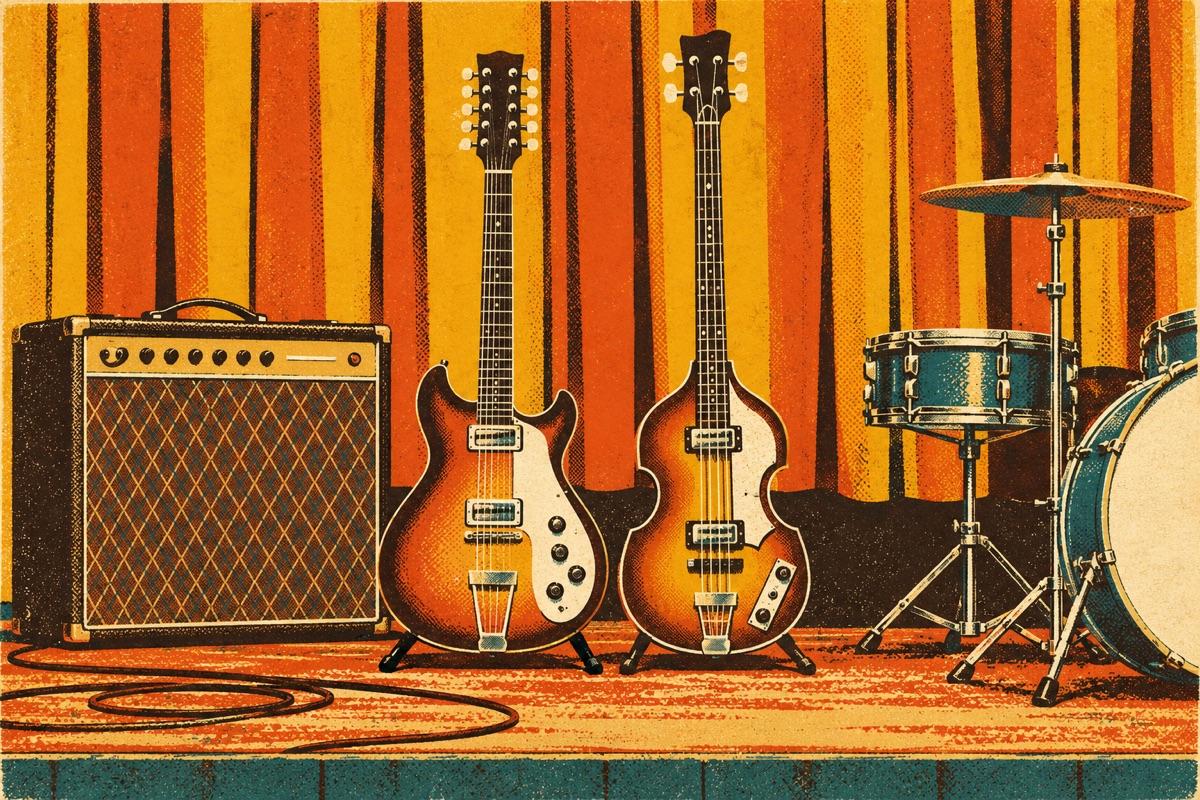
The sound of beat was shaped to a large degree by the Vox AC30 amplifier with EL84 tubes, which delivered a bright, slightly overdriven tone and is linked to the British Invasion. The gear also included a twelve-string guitar, a violin bass and a plain drum kit. This overview explains why the combination sounded so bright and glassy, using the contrast between the individual instruments.
What Did the Beat Sound Consist Of?
The sound of beat rested on the contrast between bright guitars and a bass that stood out clearly. While the guitars took the highs, the bass ordered the lows, and the drums held a steady pulse. Multi-part vocal harmonies were an important part of the style and added to the instrumental layer of the songs.
A simple division of roles was what mattered most, and it produced a clear sound picture. Each instrument had its own place, so the guitars never drowned out the bass and the bass never covered the guitars. The Vox AC30 and the twelve-string guitar supplied the sparkle, the Hofner bass the depth and the drums the pulse. None of these elements got in the way of another. As one more bright layer, the vocal harmonies sat on top of guitars and bass instead of competing with them.
The Twelve-String Guitar and the Vox AC30
The twelve-string Rickenbacker, associated with George Harrison, delivered a ringing, almost chorus-like chord sound. Thanks to the doubled strings, even simple chord shapes filled the room. That made the twelve-string guitar one of the hallmarks of the era.
Just as important was the Vox AC30 amplifier. Its EL84 tubes gave the tone a bright character and a slight overdrive that did not turn into harsh distortion. It also mattered that Vox tied its amplifiers to British groups in its advertising from 1963 to 1965. The Vox AC30 therefore came to be identified with the whole scene of British bands.
The Violin Bass and the Drums
The Hofner 500/1, also called the violin bass, is linked with Paul McCartney. The instrument is light and symmetrically built. It was also meant to persuade double bass players from jazz and beat groups to switch to an electric instrument. That change meant an important shift in playing the low registers. Audibly, the violin bass marked the lows clearly and formed a counterweight to the bright guitars.
Drumming in beat is plain. The snare accents the second and fourth beats, while the bass drum and hi-hat keep an even rhythm. This way of playing left room for both the guitars and the vocals, so the sound of beat stayed transparent. The simple drumming thus formed a solid backdrop against which guitars and bass could unfold their parts.
Summary
Bright guitars, a bass that stood out clearly, the even rhythm of the drums and multi-part harmonies made up a coherent whole. The beat sound came from the interplay of equipment and simple arranging rules, not from one special instrument. When you listen to recordings from that time, it pays to listen for each of these elements on its own.