Singles and Radio: How Beat Reached Its Listeners
In the 1960s, singles and radio were the two routes by which beat music reached young listeners. The single let you buy a record of your own, and radio made new songs audible over the airwaves. How the two routes worked and why they complemented each other so well is explained here through the record, the jukebox and an unlicensed station.
What Is a Single?
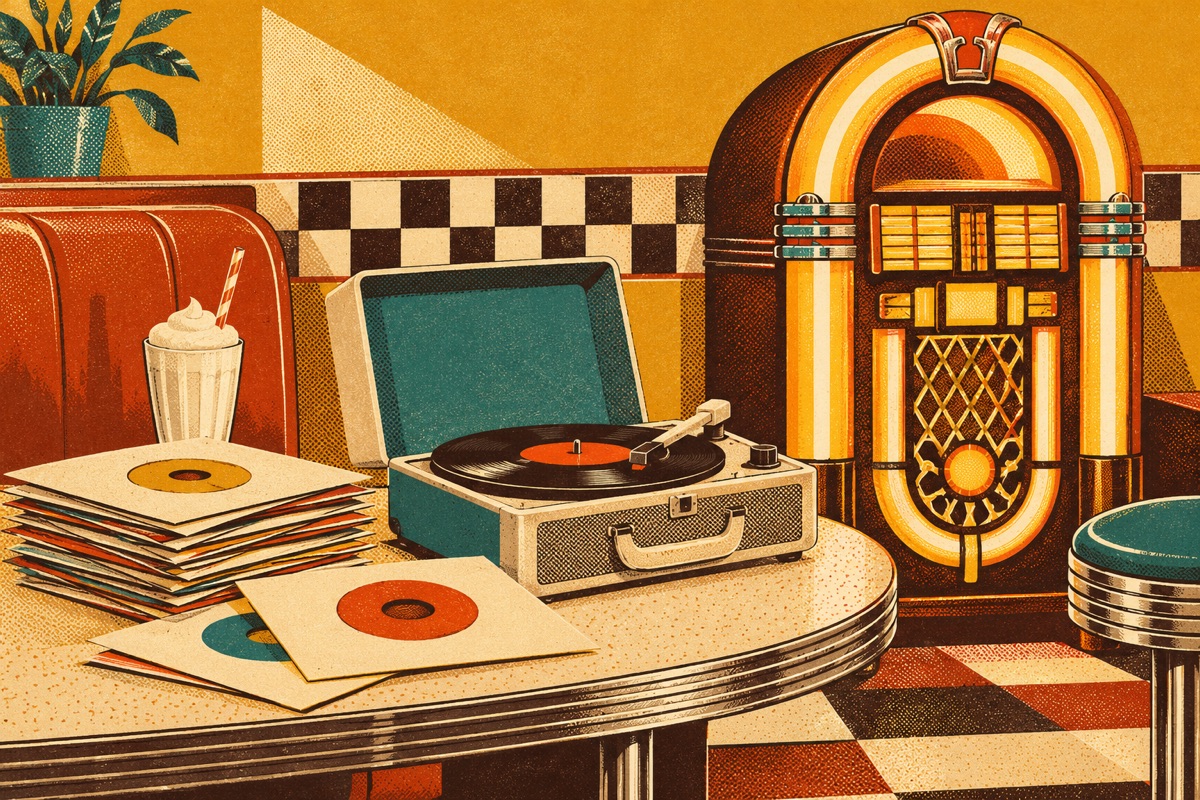
A single is a record seven inches across that spins at 45 revolutions per minute. The format was introduced in the late 1940s and, in the 1960s, was used to release beat music. One side held the actual hit and the other a supplementary track.
This split had practical effects. Anyone who bought the record for a single song got a second one along with it. Compared with an album, a single was cheap, so young listeners could often afford it. Beat bands could therefore reach their audience again and again with the next single.
Jukeboxes: The Single Away From Home
Not everyone had a record player at home. Cafes and pubs had jukeboxes where singles could be heard even without a device of your own, so people whose households had no record player could still listen to music.
The single was thus available outside the home as well. Someone who had come to know a song in a pub could then decide whether to own it. In this way the jukebox could make possible the first encounter with a new single.
Radio Caroline: A Station Without a License
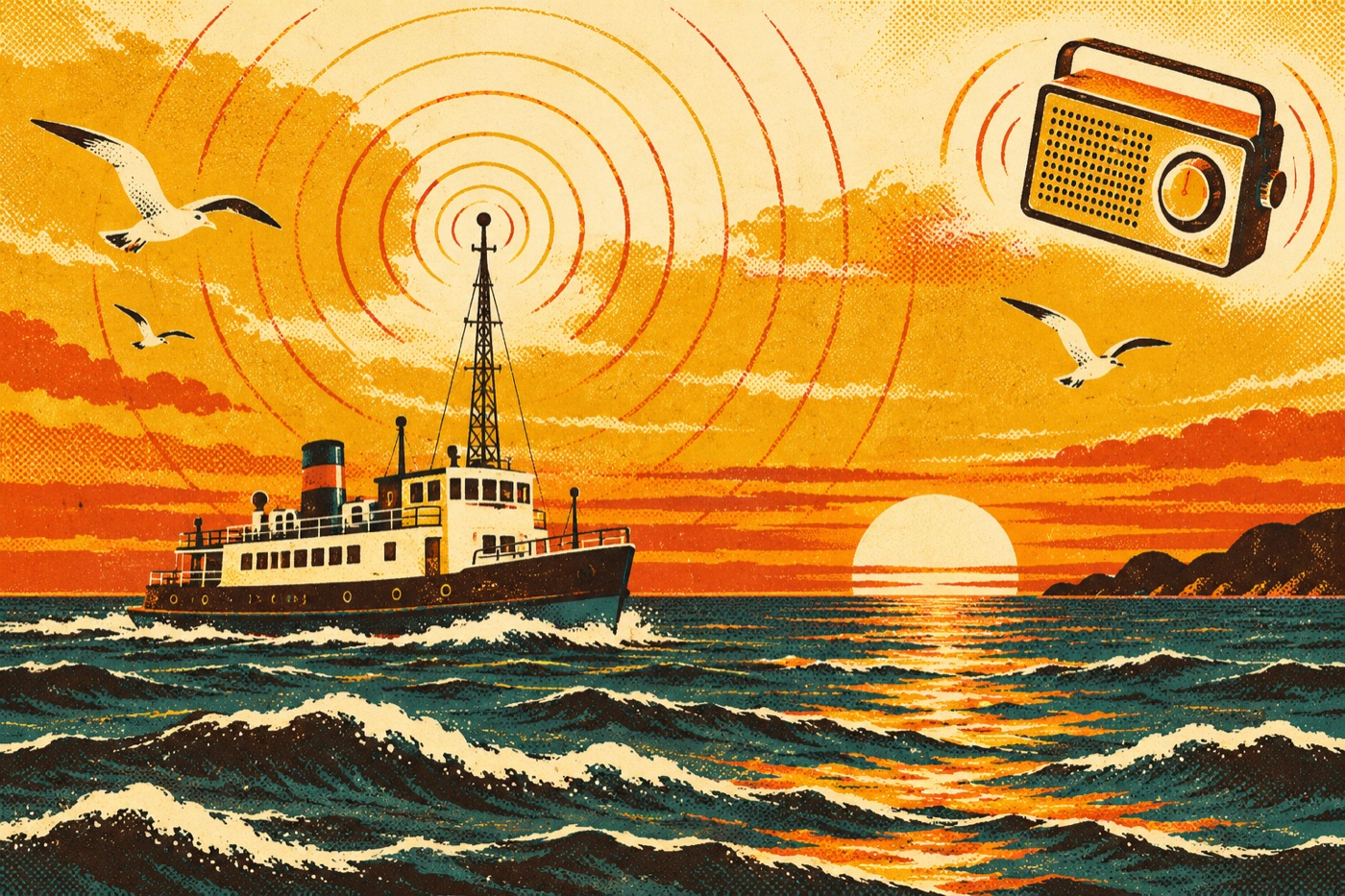
The second route was radio. Radio Caroline went on the air on March 28, 1964, broadcasting its program without an official license from a ship in international waters. The station was founded by Ronan O'Rahilly, who bought a former Danish passenger ferry in February 1964.
Radio Caroline's program was not limited to one kind of music. Listeners could hear the Beatles, the Rolling Stones and other beat groups, but also older artists such as Frank Sinatra or Ella Fitzgerald. By the end of summer 1964 the station is said to have had more listeners than the three BBC programs combined. This claim is passed on only with reservations and is more of an estimate than a reliable measurement.
How Singles and Radio Worked Together
Radio made a song known, and the single made it possible to own that song. A tune heard on Radio Caroline could end up as an inexpensive single in a home collection, and the jukebox kept it present outside the home too. Singles and radio of the 1960s thus formed a closed circuit of music in which each link strengthened the others.
This interplay is important for understanding beat culture. The single was cheap, the jukebox stood in the pubs, and on the radio you could hear a new hit. Anyone who wants to learn more about the music of those years will find more on the subject in the other articles in this magazine.